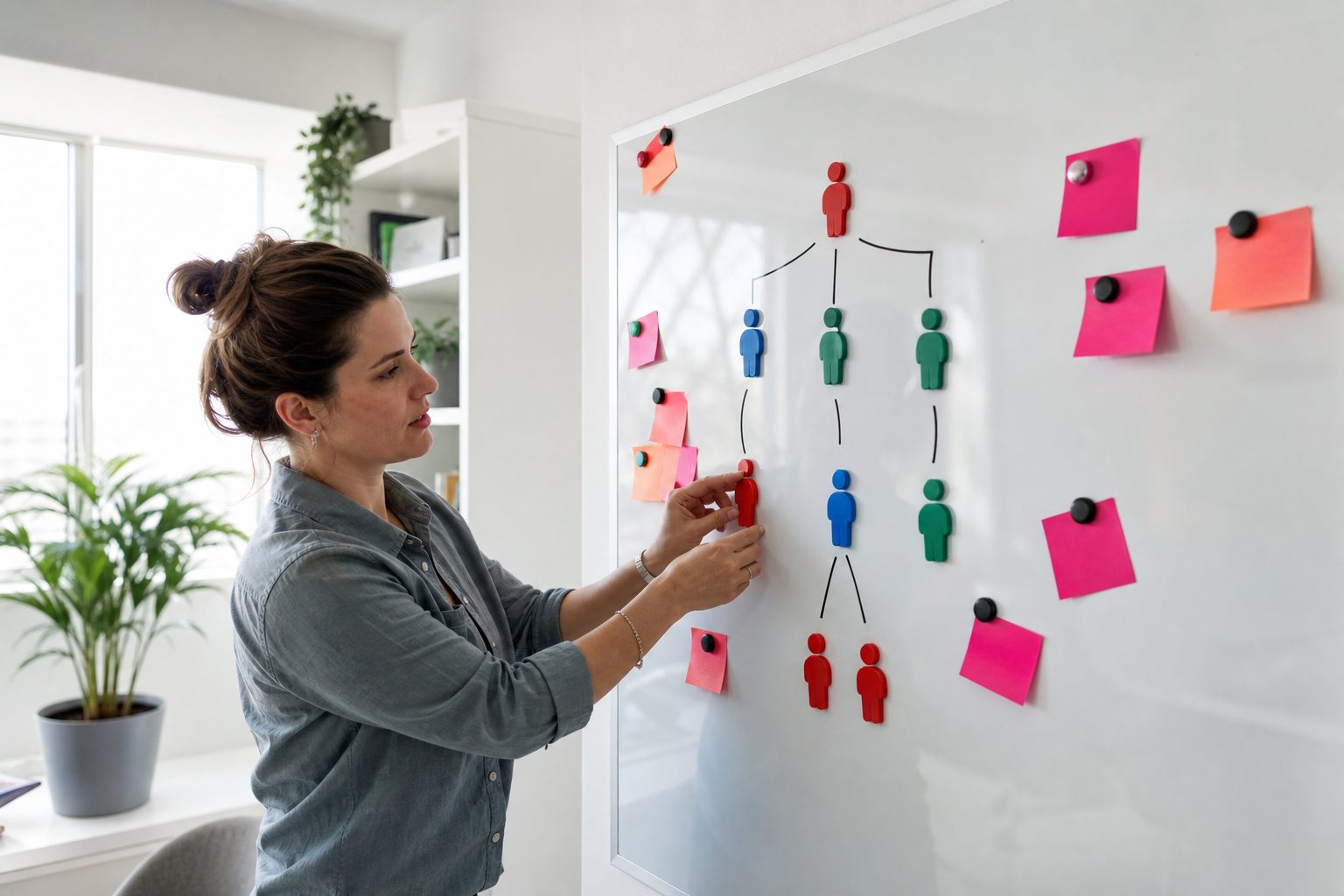
comparison
Should I run my parties in person, on Facebook Live, or as a hybrid this season?
Each party format carries a different cost, time load and close pattern. Compare setup expense, host recruitment, order collection and follow up before you commit your calendar.
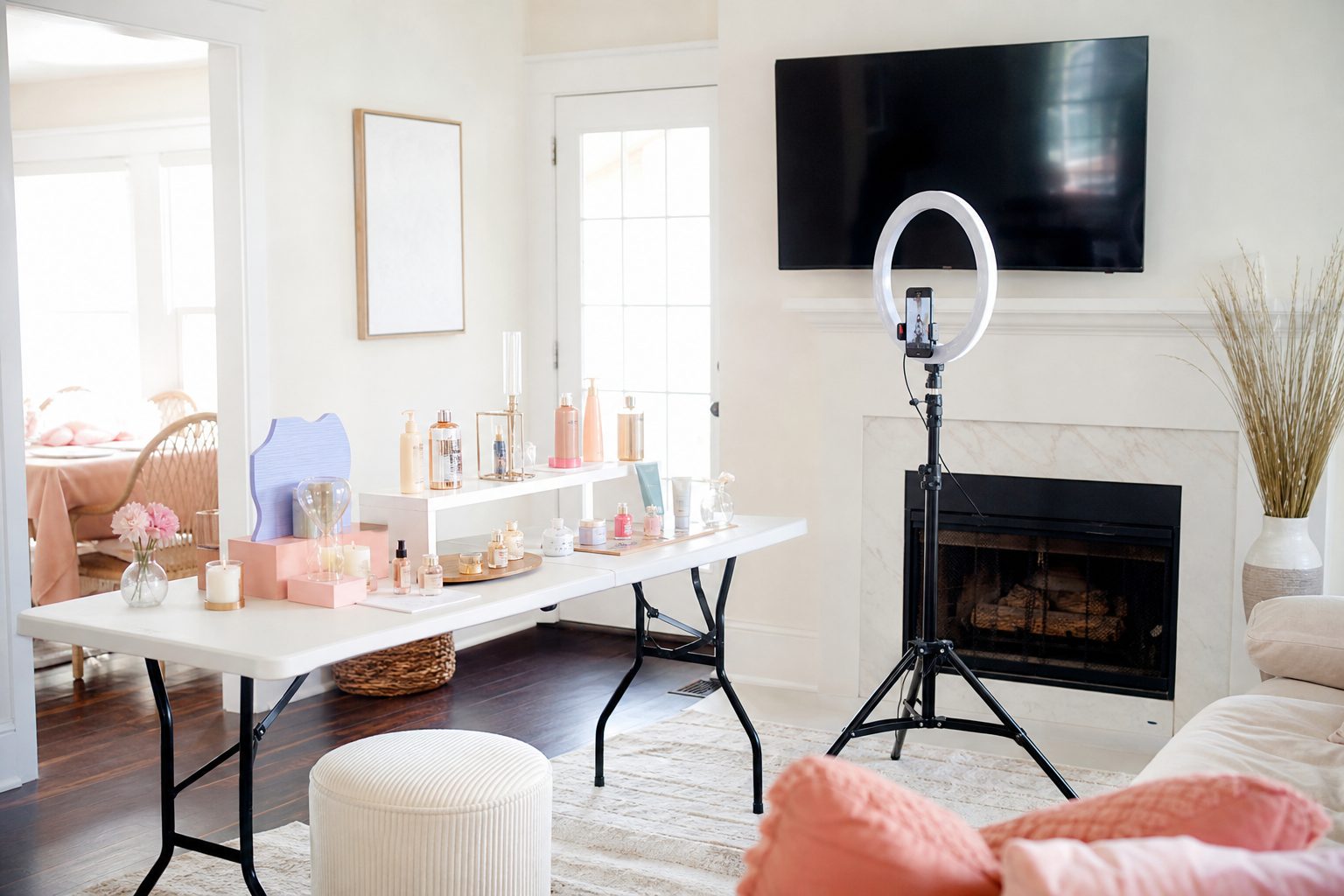
For most product lines in the US market, the honest answer is a mix, weighted toward whichever format your hosts will actually invite people to. In person events convert best and cost the most in time and gas. Livestreams cost almost nothing per event and close slower, over days rather than hours. Hybrid works only when one of the two audiences is clearly secondary.
The choice is really a calendar question, not a preference question. An in person party consumes an evening plus travel plus prep, roughly four to five hours of your life. A Facebook Live consumes forty minutes on air and then leaks into your week as comment replies and follow up messages. Both are real costs. Only one of them shows up on a calendar, which is why leaders routinely overbook online events and then wonder why their week disappeared.
Here is how the two formats differ in the places that matter to your margin and your booking rate.
What each format actually costs you per event
Build the number yourself rather than trusting a rule of thumb. Below is a worked comparison using assumed figures; swap in your own.
| Cost line | In person | Livestream |
|---|---|---|
| Round trip driving, 24 miles at the IRS business rate | About $16 | $0 |
| Host thank you gift | $18 | $18 (mailed, plus $6 postage) |
| Samples consumed or given away | $25 | $12 (mailed sample packets to three guests) |
| Printed order forms, catalogs, giveaways | $14 | $0 |
| Equipment amortized per event | $0 | $2 (ring light and tripod over their useful life) |
| Direct cost per event | About $73 | About $38 |
| Your hours | 4.5 | 2.5 spread over five days |
Note the mileage line. The IRS publishes a standard business mileage rate each year, and driving to a party is ordinary business travel. Whatever the current year's rate is, log the miles. Ten in person parties a month is a deduction worth having, and it is a cost worth seeing when you compare formats.
Now divide by results. If the in person event closes $480 in retail and the livestream closes $260, the cost as a percentage of sales is roughly 15 percent and 15 percent. The formats look identical on cost efficiency and completely different on hours. That is usually where the real decision sits.
Keep reading: What income claims can I legally make when I recruit someone onto my team?
Time from booking to close in each format
In person events close in the room. Guests write on a form, hand you a card, and the party total is essentially known when the last person leaves. Outside orders trickle in for a few days and the host closes within about 48 hours.
A livestream closes over a tail. Perhaps a third of orders arrive during the broadcast, another third from the replay in the following 24 hours, and the remainder from direct messages over three to five days. The replay is doing real work, which is why closing an online party the same night is leaving money behind.
Practical consequence: an online party you launch on the 28th will not fully close before a month end. If your rank depends on a close date, book online events so their tail lands well inside the period, and reserve the final week of the month for in person events and personal outreach that close on the spot.
How host coaching differs between a living room and a livestream
In a living room, your host's job is attendance. In a livestream, her job is attention. Those need different scripts.
Coaching an in person host
Ask for a guest list of 20 to 25 invited to get 8 to 12 in the room. Have her invite by phone or voice note, not by group text. Set a target of three confirmed guests 48 hours out, because if she has not got three by then, the party will be four people and you should reschedule rather than drive there.
Coaching a livestream host
Attendance is not the metric; adding people to the event or group is. Have her add guests personally rather than posting a public link, then post twice before the event and once during, tagging people by name. The single highest value action is her going live for sixty seconds herself the day before to say why she uses the product. Guests come for her, not for you.
In both cases, the host needs to know what she earns before she invites anyone. Give her the exact hostess reward tiers in writing. A host who can say "at $400 I get two free items" recruits guests far better than a host who says "there are rewards."
Keep reading: Why do my new consultants quit in their first ninety days, and what am I missing?
Order collection, shipping and who pays what
This is where online parties quietly get expensive if you do not set the rules on day one.
For in person parties, the classic model is a single host order: guests pay you, you place one order shipped to the host, she distributes. Fewer shipping charges, more of your labor sorting product, and you are holding customer money until you place the order.
For livestreams, direct ship to each customer is nearly always correct. Each guest pays her own shipping and sales tax, the order is in her name, and returns are between her and the company. You handle no cash and no sorting.
Two things to check in your policies before you choose. First, whether your company charges tax based on the shipping address, which in most states it does, meaning a multi state online party has several tax rates and you should never quote a single total. Second, whether individual direct ship orders still aggregate to the party for host rewards. If they do not, the host will feel cheated, and that is a relationship you do not get back.
Which format recruits better, and why that varies by product line
Recruiting follows demonstration. If your product needs to be touched, tasted, smelled or applied, in person events recruit better because a guest can imagine herself doing what you just did. Cosmetics, skincare, kitchen tools, food and candles sit here.
If your product's appeal is visual and the sale is about design, color or a catalog you can scroll, online events recruit competitively, and they recruit a different person: someone who saw herself doing what you did on camera from her own kitchen at 8 p.m. Jewelry, apparel, home decor and printed goods sit here.
There is also a geography effect that has nothing to do with the product. Online events reach beyond your county. If you are building a team across state lines, online is not a preference, it is the mechanism. Just be aware that a downline you have never met needs more structured contact, not less.
See how PartyPlanRank handles this for direct sales and social selling teams
Running a hybrid without doubling your workload
The failure mode of hybrid is trying to serve both audiences equally. You end up talking to a phone while eight women in a living room watch you talk to a phone.
Pick a primary. If the room is primary, put the phone on a tripod at the back, let it capture the demo, do not read comments live, and assign the host or a downline consultant to answer comments on her own phone. If the stream is primary, treat the three people physically present as your studio audience and stop apologizing to them for looking at the camera.
A simpler and often better version: run them sequentially. Do the in person party, then post the recorded demo to the host's event page the next morning for anyone who could not come. You get the online tail without splitting your attention.
Choosing a format mix for a twelve week stretch
A workable default for a leader carrying both selling and coaching responsibility:
- Two in person parties per month, booked in the first three weeks so they close inside the period.
- Two livestreams per month, launched around the 5th and the 15th so their tails close before month end.
- One recruiting focused event per quarter, in person if your product demonstrates physically.
- The last five days of every month held clear of new events and used only for closing, reactivation and rank pushes on your team.
Over twelve weeks that is six in person events, six livestreams and one recruiting event, roughly 45 hours of party time. Track the retail per hour of each format for one quarter using your own numbers. After twelve weeks you will not be guessing anymore, and the answer may be different from your neighbor's, which is fine.
Where the format decision meets team building
The format question gets harder once you have a team, because now you are not just choosing your own calendar. You are watching who booked nothing this month, who ran three livestreams and closed all three, and who is one order from her next rank while she waits for a party to fill.
PartyPlanRank shows you that in one view: who sold this week, who has gone quiet, and where each consultant sits against her next rank. Use it to spot the consultant whose in person parties keep cancelling and move her to online for a month, before the quiet turns into an exit.